
Last updated November 18, 2026
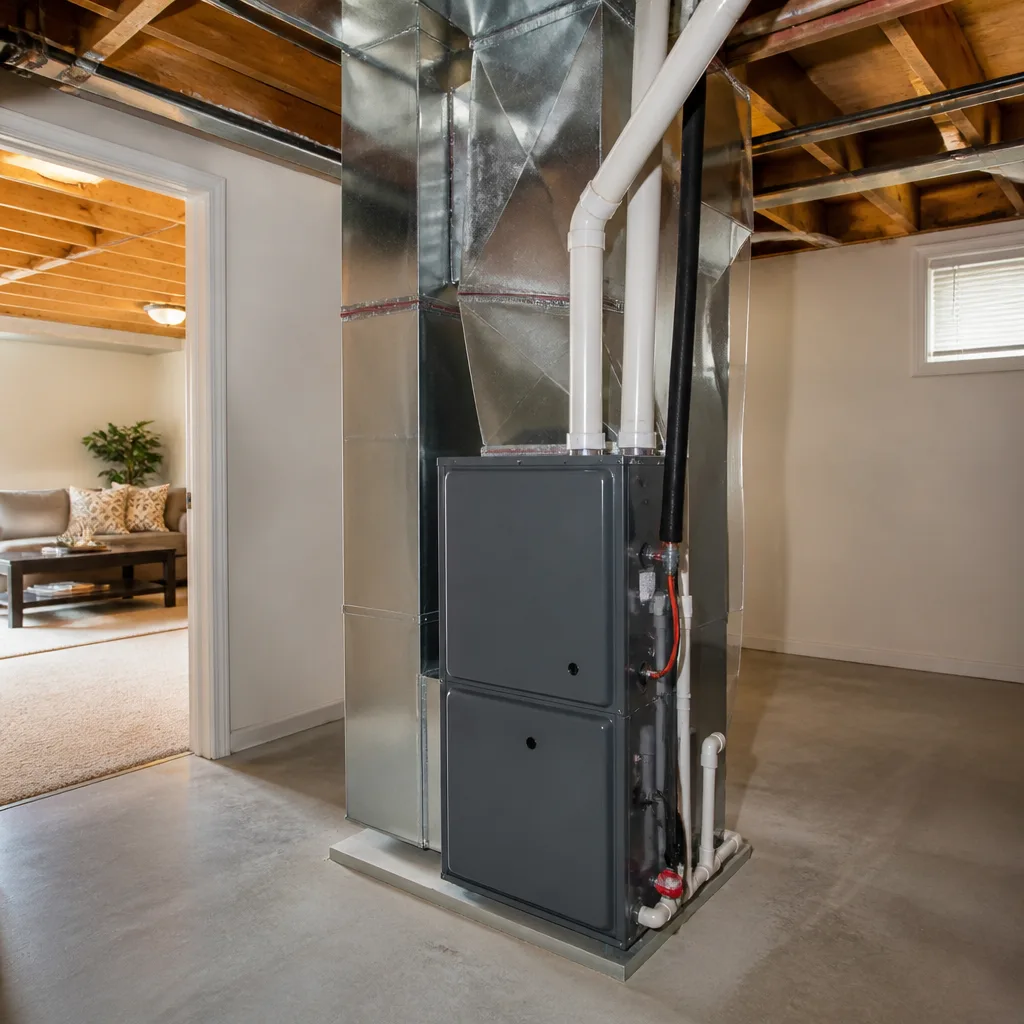 Furnace & heating
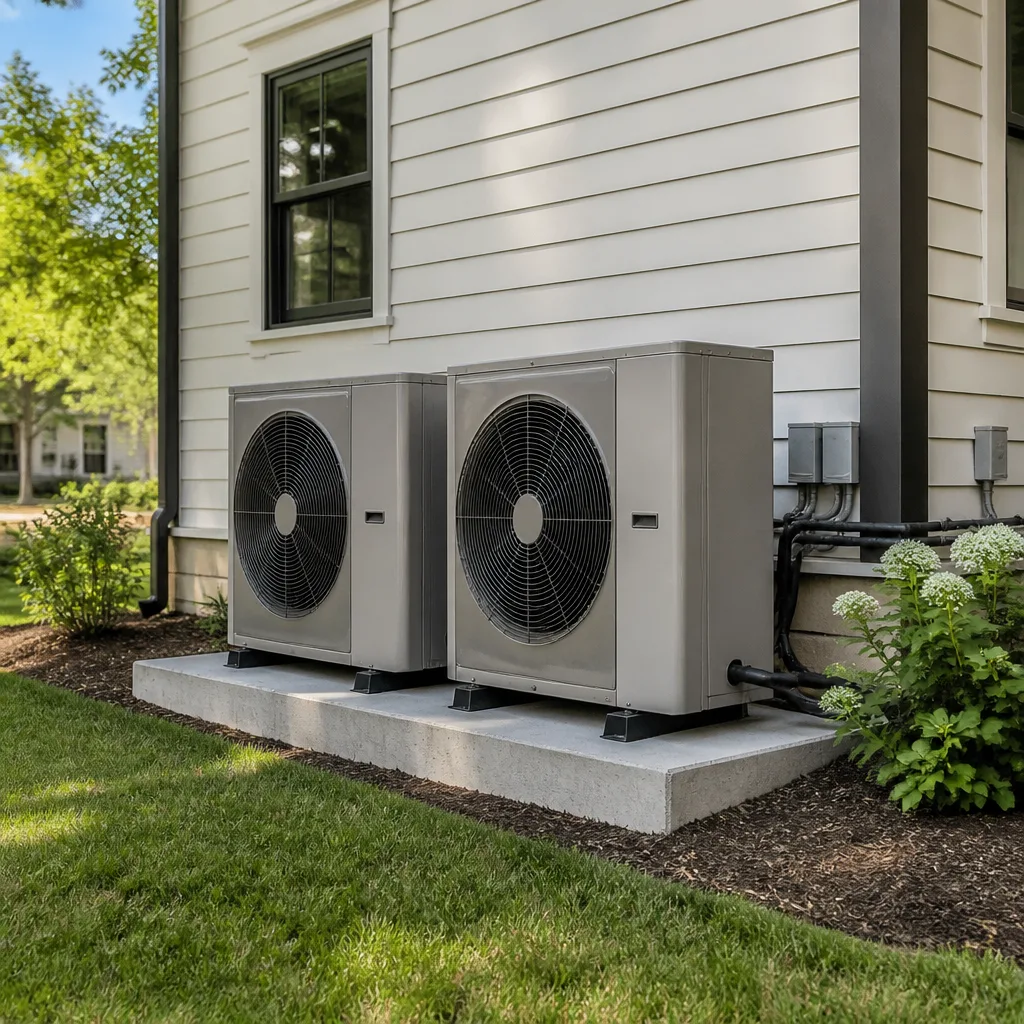 Heat pumps
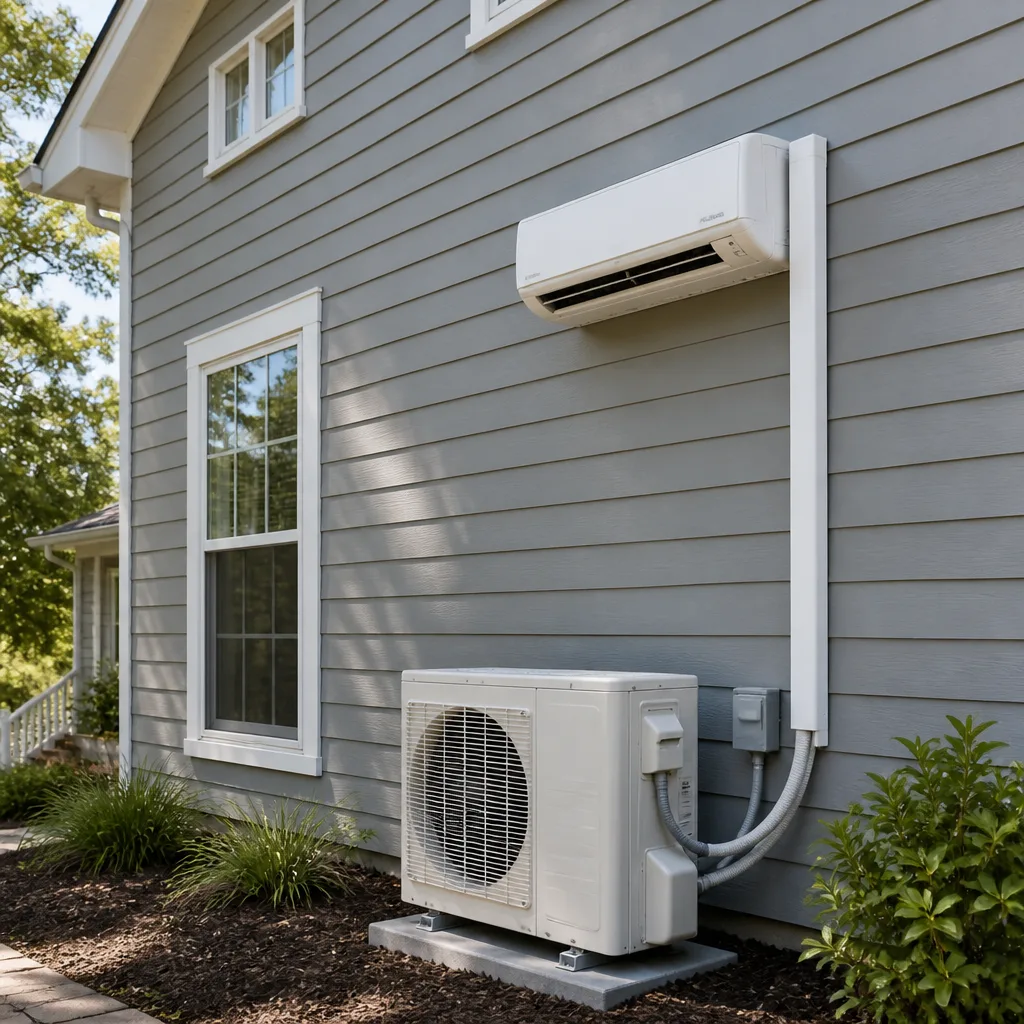 Ductless mini splits
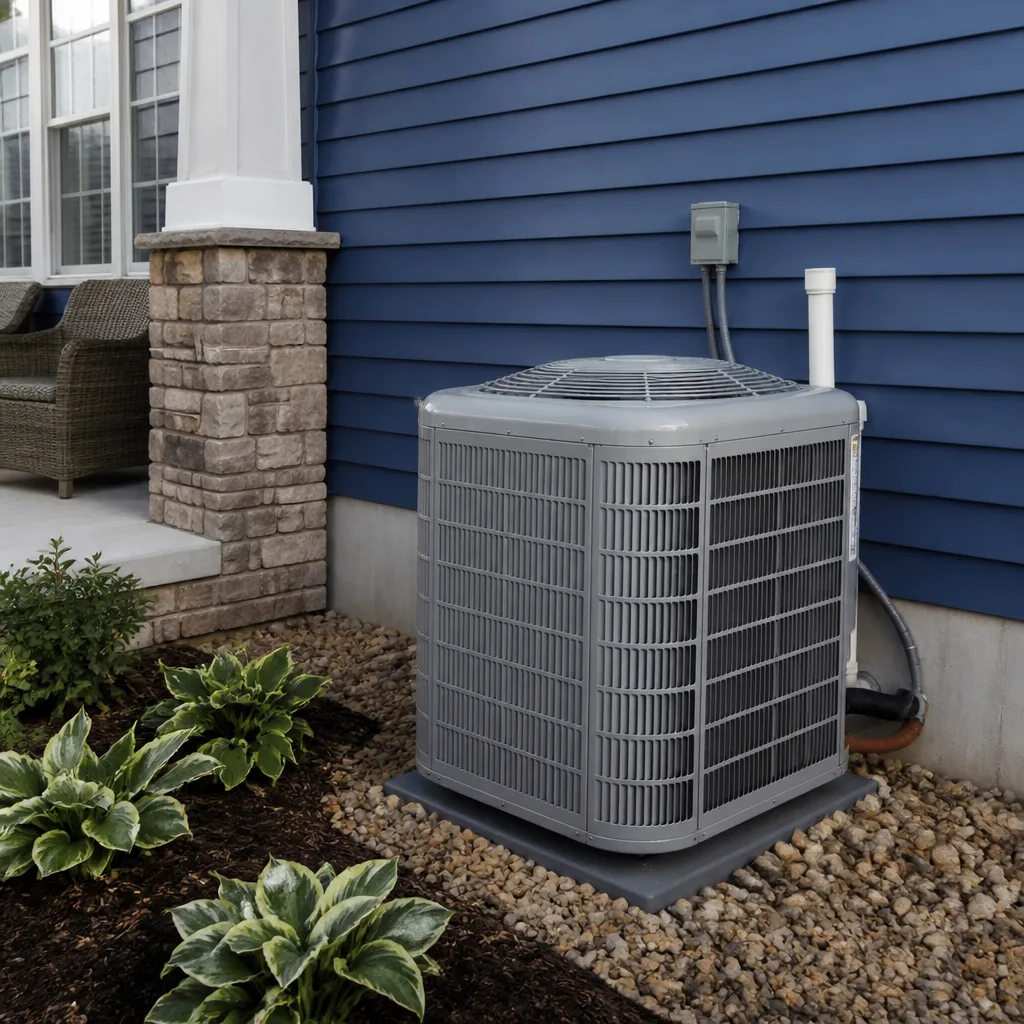 Carrier
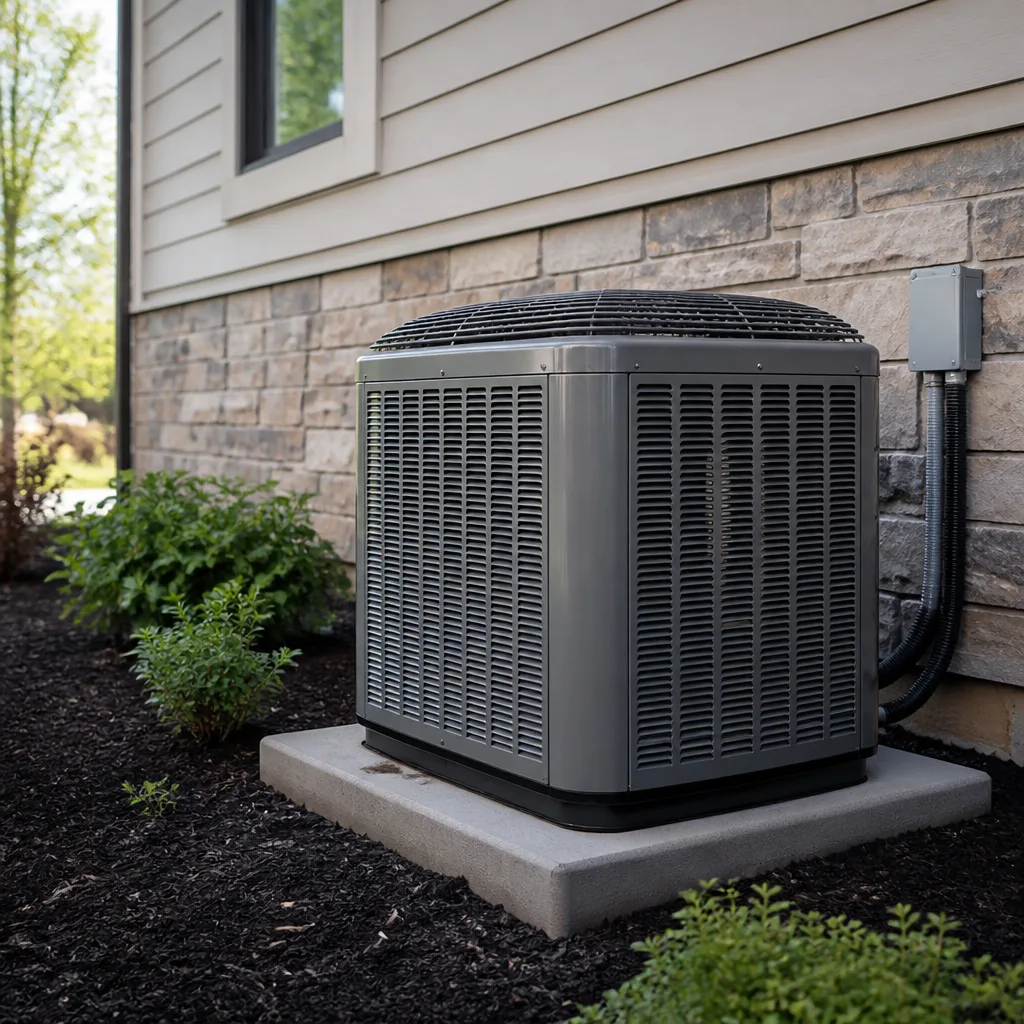 Trane
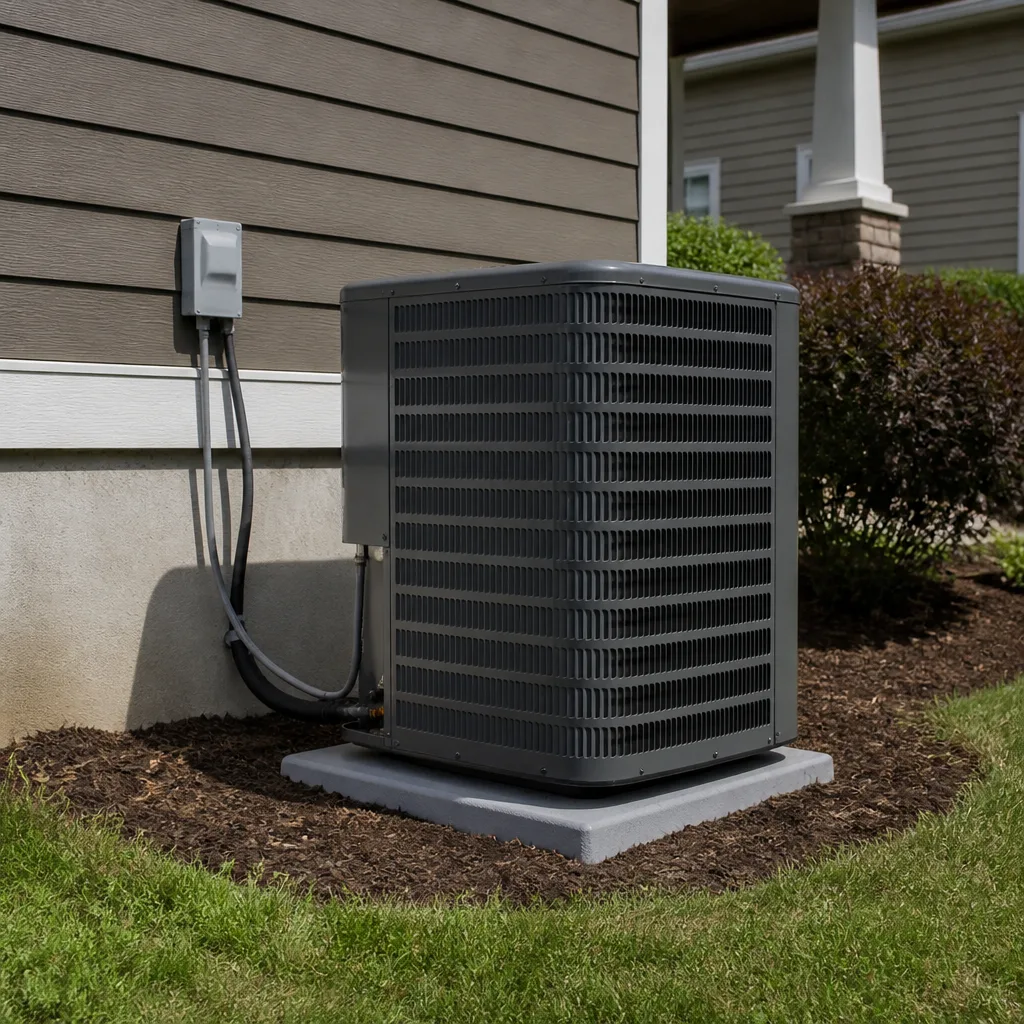 Goodman
Seasonal tune-up and full diagnostic on your Carrier, Trane, or Goodman system - readings shown to you before any repair is proposed
Diagnosis first, numbers second - you approve the repair price before a single part goes in.
Get your free estimateAC Repair Troubleshooting in Winchester: Common Problems and How to Fix Them
A frozen evaporator coil and a clogged air filter can produce the exact same symptom: warm air blowing from the vents. One you can clear in an afternoon. The other can take out a compressor if you let the system run another hour. The question “when did you last change your filter?” won’t tell you which one you’re facing. This guide walks Winchester homeowners through symptom-first troubleshooting: what each failure looks like, what you can safely check yourself, and the point where running the system longer turns a repair into a replacement. You’ll learn how Winchester’s dust and caliche particulate shape the way AC systems fail here, which symptoms are “schedule this week” and which are “shut it down now.”
Quick Answer
Most AC problems in Winchester fall into five buckets: warm air from the vents, weak or no airflow, a unit that won’t start, short cycling, or unusual noise. Warm air with normal airflow usually points to a refrigerant or compressor issue – shut it down and call. Weak airflow with a running compressor usually points to a filter, coil, or blower problem. A unit that won’t start is often a tripped breaker, a failed capacitor, or a low-voltage control fault. Short cycling and grinding or hissing sounds both warrant a technician. If you’re unsure which bucket you’re in, shut the system off at the thermostat and call (888) 335-7951 for a free estimate.
Styles & brands we work with
- AC installation
- Furnace & heating
- Heat pumps
- Ductless mini splits
- Carrier
- Trane
- Goodman
Table of Contents
- Warm Air From the Vents: The Diagnostic Path
- Weak or No Airflow: What It Tells You
- The Unit Won’t Start: Breakers, Capacitors, and Control Faults
- Short Cycling: Why It Happens and Why It Matters
- Unusual Sounds: Grinding, Hissing, Clicking, and Buzzing
- How Winchester Dust and Caliche Change the Failure Pattern
- The Triage Note: Schedule This Week vs. Shut It Down Now
- Using a Clamp Meter: Voltage and Amp Draw Checks Before You Call
Warm Air From the Vents: The Diagnostic Path
Warm air with normal airflow is the most misread symptom in cooling. Homeowners feel warm air, assume “the AC needs a recharge,” and keep running the system. That’s the wrong move. When airflow is normal at the vents but the air isn’t cold, the compressor is either not running or running without enough refrigerant to do its job. Both scenarios can destroy a compressor if the system keeps cycling.
Here’s the path we walk through on a warm-air call:
- Confirm the thermostat is set to COOL and the setpoint is below room temperature. Sounds obvious. It’s wrong more often than you’d think, especially after a power interruption resets a programmable unit.
- Check whether the outdoor condenser fan is spinning. If the fan is running but the air from the top of the unit is room-temperature rather than warm, the compressor isn’t running. Shut the system off at the thermostat.
- Check whether the indoor blower is running. If the outdoor unit runs but the indoor blower doesn’t, the evaporator coil will freeze. Shut it off.
- Inspect the air filter. A heavily loaded filter restricts airflow and can freeze the coil. If you can’t see light through it, replace it before proceeding.
- Look at the evaporator coil through the access panel. If you see frost or ice on the coil or the refrigerant lines, shut the system off and leave it off until a technician arrives. Frozen coils and low refrigerant are technician problems.
In Winchester, the warm-air-with-frost pattern shows up most in high-dust months when filters load up faster than the three-month guideline suggests. If you’re seeing frost, don’t run the system in FAN-ON mode “to thaw it faster” – that pushes moisture back into the coil and can cause more damage. Let it thaw with the system off. Our team at Winchester AC Repair walks through this exact sequence on most warm-air diagnostics.
Weak or No Airflow: What It Tells You
Weak airflow with a running compressor almost always traces back to one of four things: a restricted filter, a dirty evaporator coil, a failing blower motor, or a duct obstruction. The good news is that the first two are homeowner-checkable, and the fix is usually routine maintenance rather than repair.
Start with the filter and the return vent
Check every return grille in the house, not just the one nearest the air handler. A blocked return in a bedroom or hallway can starve the whole system. Replace the filter with one matched to the unit’s rated size. If the old filter was caked, note the date – Winchester dust loads filters faster than typical, so you may need to swap every 30-45 days during windy stretches.
Check for ice on the indoor coil
If the filter is clean but airflow is still weak, look for ice on the evaporator coil and refrigerant lines. Ice means the system is starved for airflow or refrigerant. Either way, shut it off and call. Running an iced system in Winchester summer heat is the fastest way to kill a compressor.
Listen at the indoor unit
A blower motor that hums but doesn’t turn, or turns sluggishly, often needs a capacitor or motor replacement. A blower that runs at full speed but delivers weak duct pressure points to a duct leak or a collapsed flex run. Our AC repair team sees collapsed flex duct as a recurring cause in older attic-routed systems.
Weak airflow checklist
- Replace the filter – 5 minutes, free.
- Open every return grille and confirm nothing blocks the flow.
- Check supply registers in each room for closed dampers or furniture obstructions.
- Look for frost on the indoor coil and lines. If present, shut down and call.
- Listen at the air handler for sluggish blower spin or hum-without-turn.
- Call a technician if the filter is clean, the coil is clear of ice, and airflow is still weak.
The Unit Won’t Start: Breakers, Capacitors, and Control Faults
A system that won’t start in Winchester usually has one of three problems: a tripped breaker, a failed run or start capacitor, or a low-voltage control fault at the thermostat, float switch, or control board. The first is a homeowner fix. The other two need a technician with a meter.
Step-by-step before you call
- Check the thermostat batteries and display. A blank display means no control power.
- Check the indoor air handler breaker and the outdoor condenser breaker at the panel. Look for a tripped breaker (not fully off, sitting in the middle). Reset it once. If it trips again, stop and call.
- Check the float switch and drain pan. A full drain pan can trigger a safety float that shuts the outdoor unit off. If the pan is full, shut the system off and call – you may have a blocked condensate line.
- Listen at the outdoor unit when the thermostat calls for cool. A single click with no fan usually means a contactor or capacitor fault. Continuous buzzing usually means a stuck contactor or a seized compressor. Both are technician calls.
- Check for blown fuses at the air handler. Some systems use a blade fuse on the control board. A blown fuse points to a low-voltage short – don’t replace it twice; call.
Familiar brand control boards differ in how they report faults. Trane and Lennox units often flash an LED sequence on the control board; Goodman and Rheem boards vary. If you can read the LED code, write it down before you call – it shortens the diagnostic and gets you a faster answer.
For a broader walk-through of what repair visits involve, see our AC repair page. If your existing system is beyond economical repair, AC installation is the next conversation.
Short Cycling: Why It Happens and Why It Matters
Short cycling – the system turns on, runs briefly, and shuts off, over and over – is a warning sign, not a symptom you can defer. In Winchester, short cycling in July can raise the indoor temperature to unsafe levels fast if the system can’t complete cooling cycles. Ignoring it also accelerates wear on the compressor, which is the most expensive component to replace.
Common causes, roughly in order of how often we see them:
- Oversized system. A unit too large for the house cools the air fast but never runs long enough to dehumidify, so it cycles on and off all afternoon.
- Low refrigerant charge. A pressure trip on the low-pressure switch cuts the compressor out mid-cycle.
- Frozen evaporator coil. The system ices up, then cycles as refrigerant pressure goes out of range.
- Thermostat placement. A thermostat near a supply register, in direct sun, or above a lamp can “read” a satisfied temperature while the rest of the house is still hot.
- Restricted airflow from a clogged filter or dirty coil. The high-pressure side trips and the compressor cuts out.
- Failed capacitor or failing compressor valve. Both show up as repeated start-stop without completing the cycle.
Short cycling is one of the cases where an in-person visit really is the only way forward. We’ve seen this unit in every one of the nine brands we service – Carrier, Trane, Lennox, Goodman, Rheem, York, Daikin, Bryant, and American Standard – and the diagnostic sequence is the same. If short cycling started recently and you recently changed your thermostat, mention that when you call.
Unusual Sounds: Grinding, Hissing, Clicking, and Buzzing
Noise is a diagnostic channel. Each sound points to a different subsystem, and a few of them are “shut it down now” sounds rather than “schedule it” sounds. Here’s how we sort them.
Grinding or scraping
Grinding at the outdoor unit typically means a failing fan motor bearing. Grinding at the air handler usually means a blower motor bearing or debris in the blower wheel. Either way, keep running the system and you risk the motor seizing and overheating. Shut it off and call.
Hissing
A hiss near the indoor coil or refrigerant lines is a refrigerant leak. Shut the system off, do not add refrigerant yourself, and call. Refrigerant handling is regulated and requires a licensed technician. Hissing at an attic duct joint can also indicate a leak in the flex duct.
Clicking at the outdoor unit
Repeated clicking from the contactor – especially without the fan coming on – is often a relay or capacitor fault. A single click when the thermostat calls for cool is normal.
Buzzing
Continuous buzzing at the contactor usually means a stuck contactor or a compressor drawing locked-rotor current. That’s an immediate shut-down. A buzzing thermostat can be a low-voltage short.
Squealing
Squealing at the blower or the outdoor fan points to a dry or failing bearing. Early squeal is a repair. Late squeal is a replacement. The earlier you call, the cheaper the fix.
Our specialists have up to 13 years of experience with these sounds across major brands. If you can describe the sound and where it comes from, we can often tell you whether it’s urgent before we roll a truck.
How Winchester Dust and Caliche Change the Failure Pattern
Winchester is not a humid-climate market. Troubleshooting guides written for the Southeast over-index on mold, coil slime, and humidity-driven icing. Winchester’s failure patterns are different, and if you’re reading a general “AC troubleshooting” page, that’s the first thing to throw out.
Winchester’s dust and caliche particulate load the outdoor coil and indoor evaporator faster than the standard three-month filter interval suggests. The caliche dust that settles on condenser fins is finer than typical household dust and packs into the fin spacing. A condenser that would run clean for a full season in a low-dust climate can get partially blocked in Winchester in six to eight weeks of windy weather.
What that means for troubleshooting:
- Filter intervals of 30-45 days during windy stretches are reasonable in Winchester. Waiting for three months is the cause of more frozen-coil calls than any other single factor.
- Outdoor coil cleaning matters more here than in humid climates. The dust packs the outdoor coil, raises head pressure, and shortens compressor life. A garden-hose rinse from the inside out (system off, power off) is homeowner-safe. Deeper coil cleaning belongs on a maintenance visit.
- Dry air means less condensate, but a blocked condensate line still trips the float switch. Don’t ignore a wet spot around the air handler because “it’s dry out.”
- Ignition of attic dust and caliche near a hot condenser is a reason to keep the outdoor unit area clear of stored items and yard debris.
- Static pressure buildup from dust-clogged return grilles manifests as warm air in the farthest rooms from the air handler. That gets misread as a refrigerant problem.
We built our maintenance visits around Winchester’s dust profile – the timing of coil cleanings and filter changes is sequenced to peak heat rather than to a generic calendar. If you haven’t had a AC repair visit this season and your system is running hot, we’d rather see it before the peak than after a compressor fails.
The Triage Note: Schedule This Week vs. Shut It Down Now
Winchester outdoor temperatures in July and August are hot enough that a failed AC is a health concern, not just an inconvenience. Elderly residents, infants, and anyone with a chronic condition are at real risk when indoor temps climb. That’s why this section exists: some symptoms can wait a week, and some can’t wait an hour.
Shut it down now and call
- Frost or ice on the indoor coil or refrigerant lines.
- Warm air from the vents with the outdoor fan running – especially if the top of the outdoor unit is not blowing hot air.
- Grinding, loud buzzing, or repeated clicking at the outdoor unit.
- Refrigerant hiss.
- Burning smell or scorch marks at the air handler or disconnect.
- A full drain pan with water on the floor.
- Any breaker that trips twice after one reset.
Schedule this week
- Weak but present airflow with clean filter and no ice.
- Short cycling without a hard fault.
- One room warmer than others.
- Routine noise (squeal, rattle) that isn’t grinding.
- A thermostat that sometimes displays blank but the system otherwise runs.
Schedule a maintenance visit
- Filter changes on a routine.
- Outdoor coil cleaning.
- Condensate line flush.
- Annual capacitor and contactor inspection before peak season.
Triage is the single biggest service call saver we know. If you’re between categories, call us and describe the symptom. We’ll tell you honestly whether it’s a shut-down or a schedule-this-week.
Using a Clamp Meter: Voltage and Amp Draw Checks Before You Call
A basic clamp meter costs about $15 to $25 and can hand a technician more information than you realize. We don’t recommend you use it on live internal parts unless you’re comfortable with electricity and understand that the air handler and outdoor condenser both carry high voltage. If you’re not, skip this section and keep the homeowner-safe checks above.
If you are comfortable with a meter, here’s what we look for that a homeowner can also check safely, with the panel closed and the disconnect in place:
- Outdoor condenser amp draw at the supply conductors. Compare to the nameplate RLA (rated load amps). A reading well above RLA points to a failing compressor or high head pressure. A reading near zero with the contactor closed points to a failed capacitor or an open winding. Either reading belongs in a technician’s hands.
- Control voltage at the thermostat sub-base. 24 VAC is nominal. A reading below about 22 VAC points to a low-voltage short, a failing transformer, or a damaged control wire.
- Capacitor microfarad reading. Every run and start capacitor has a rated microfarad value on its label. A measured value more than about 10% below rated is a failed capacitor. This is the single most common single-part failure we see.
- Blower motor amp draw. Compare to the motor nameplate. A reading above rated points to bearing drag or a partially blocked wheel.
- Contactor coil voltage. 24 VAC when the thermostat calls for cool. If the contactor has 24 VAC at the coil but the contacts don’t pull in, the contactor is failed.
Write the readings down and bring them to the call. Brand-specific control boards – Trane, Lennox, Goodman, and Rheem all report differently – will get the technician to the fault faster when they already know the amp and voltage picture.
Common Mistakes to Avoid
- Resetting a tripped breaker more than once. A breaker that trips twice in a row is telling you something is wrong. Repeated resets can damage the compressor. Stop, and call.
- Running an iced system to “see if it fixes itself.” It won’t. Ice is a symptom of either low refrigerant or restricted airflow, and running the system turns a repair into a compressor job.
- Adding refrigerant without a leak test. A low charge means refrigerant escaped somewhere. Topping off without finding the leak is money spent twice.
- Skipping filter changes during Winchester’s windy stretches. Three months is fine in a low-dust climate. In Winchester, the 30-45 day window is often the right call.
- Judging airflow by one register. The bedroom that feels weak might be blocked at the return, not at the supply. Check every return and every supply before assuming a duct problem.
- Ignoring short cycling because “it’s cooling fine.” Cooling fine while cycling five times an hour is still wearing out the compressor. Short cycling is a slow-failure warning.
- Buying a thermostat replacement without checking the transformer first. A dead thermostat is often the visible symptom of a failed transformer or a shorted control wire. Putting a new thermostat on a bad control circuit burns the new one out.
See the difference
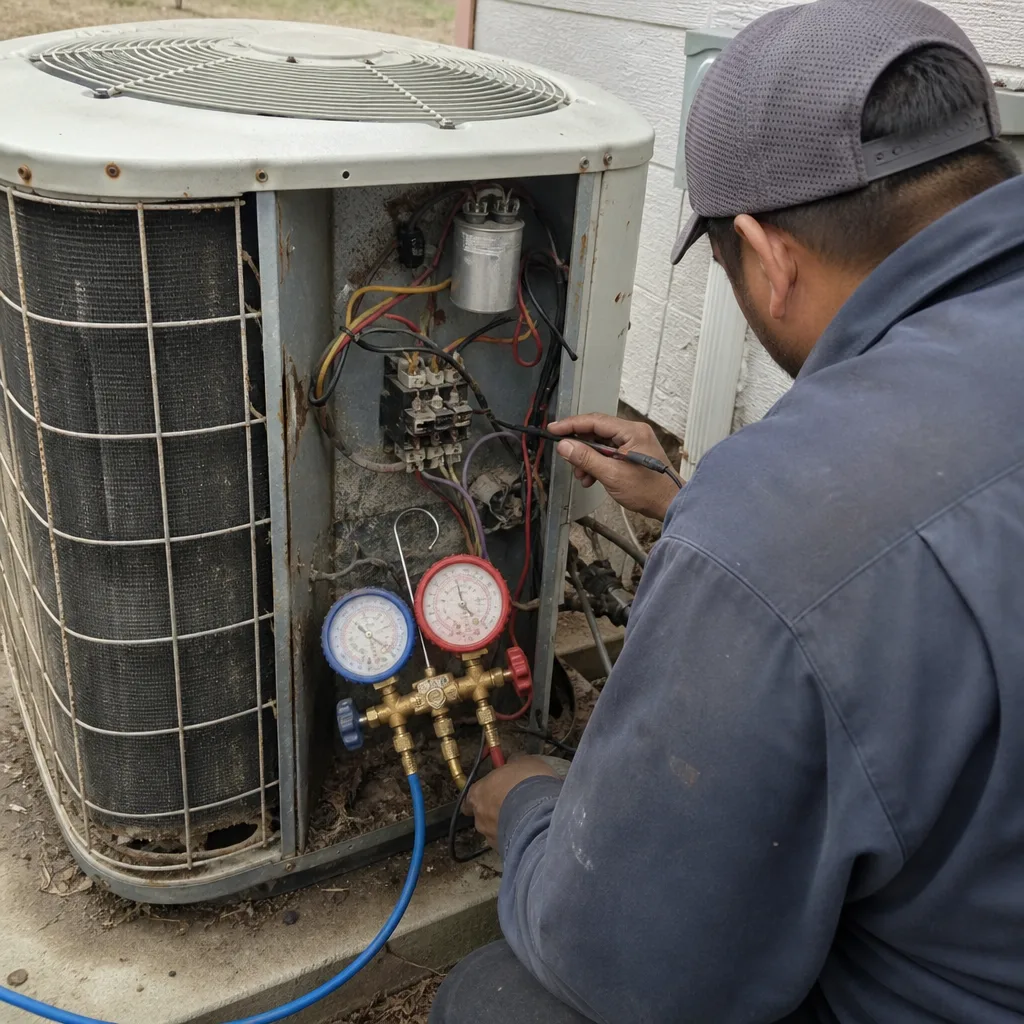 Before
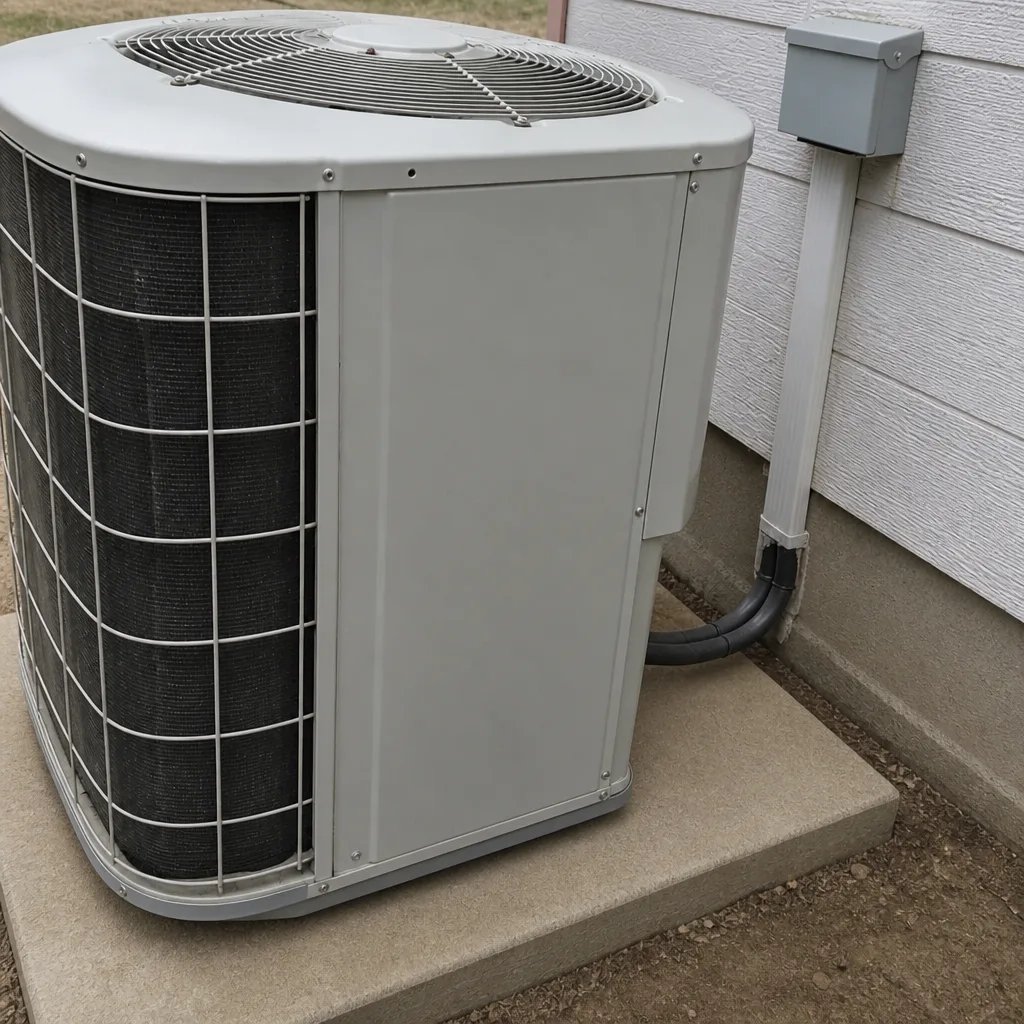 After
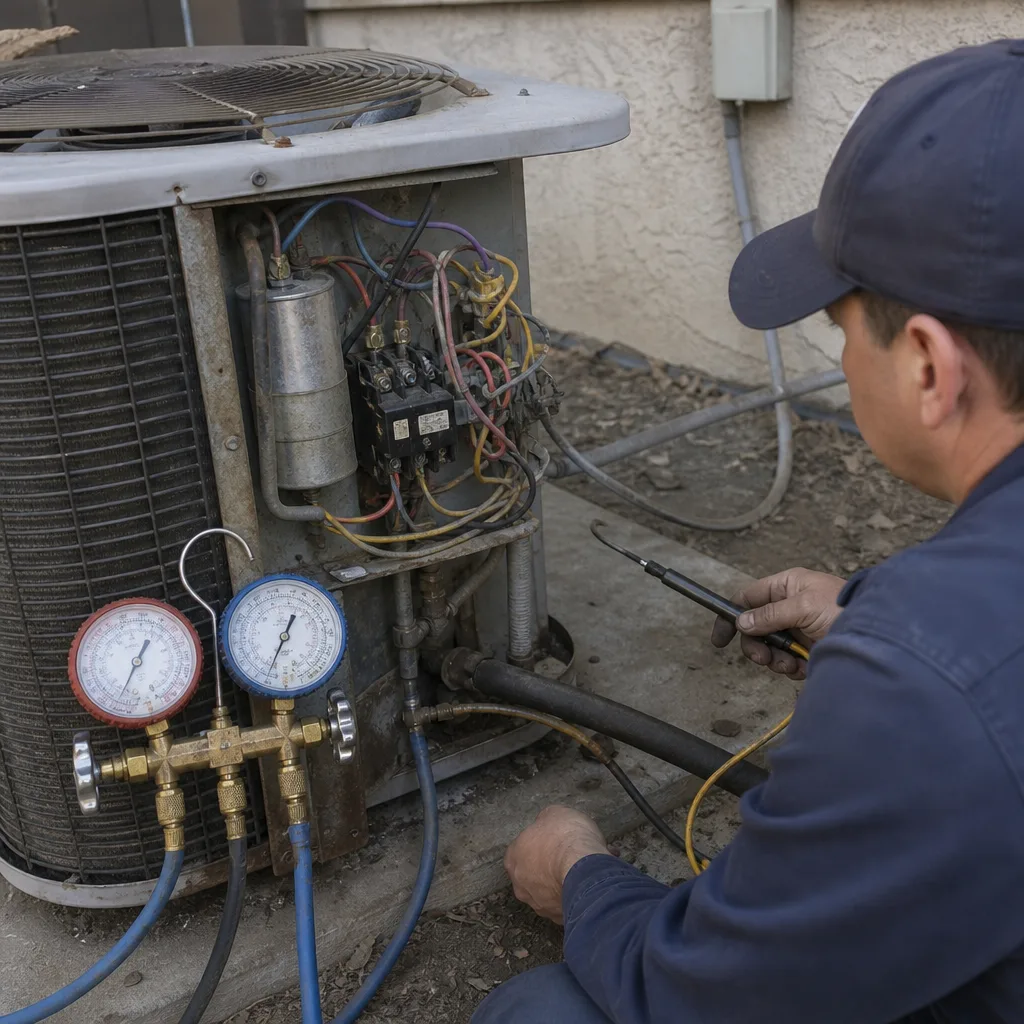 Before
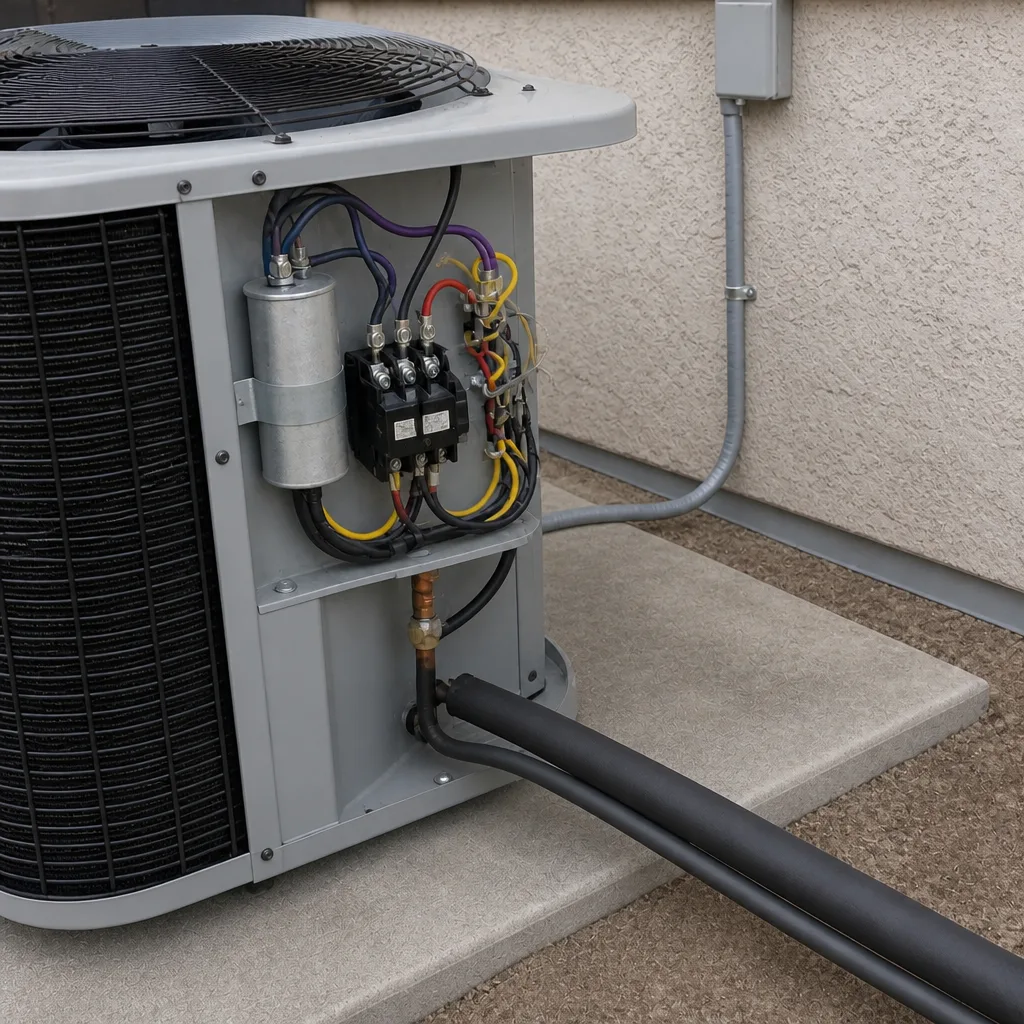 After
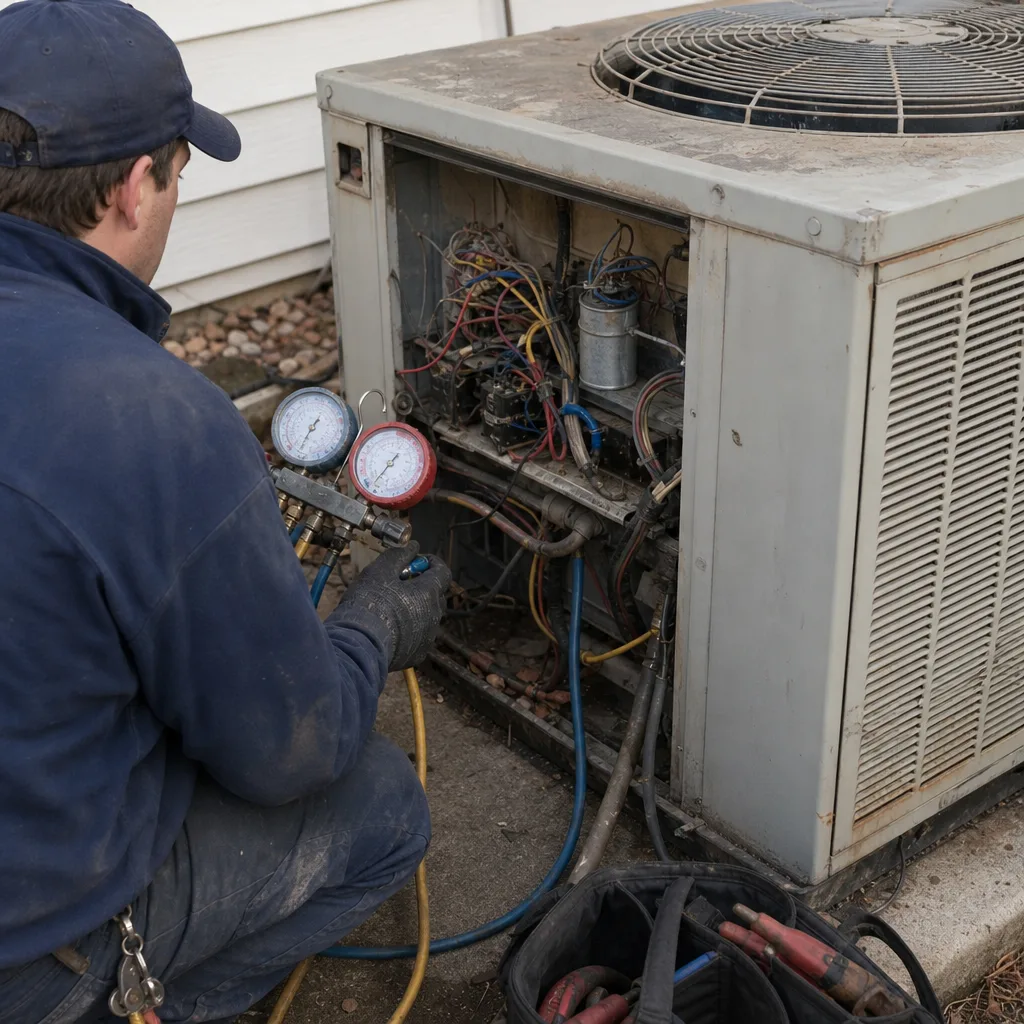 Before
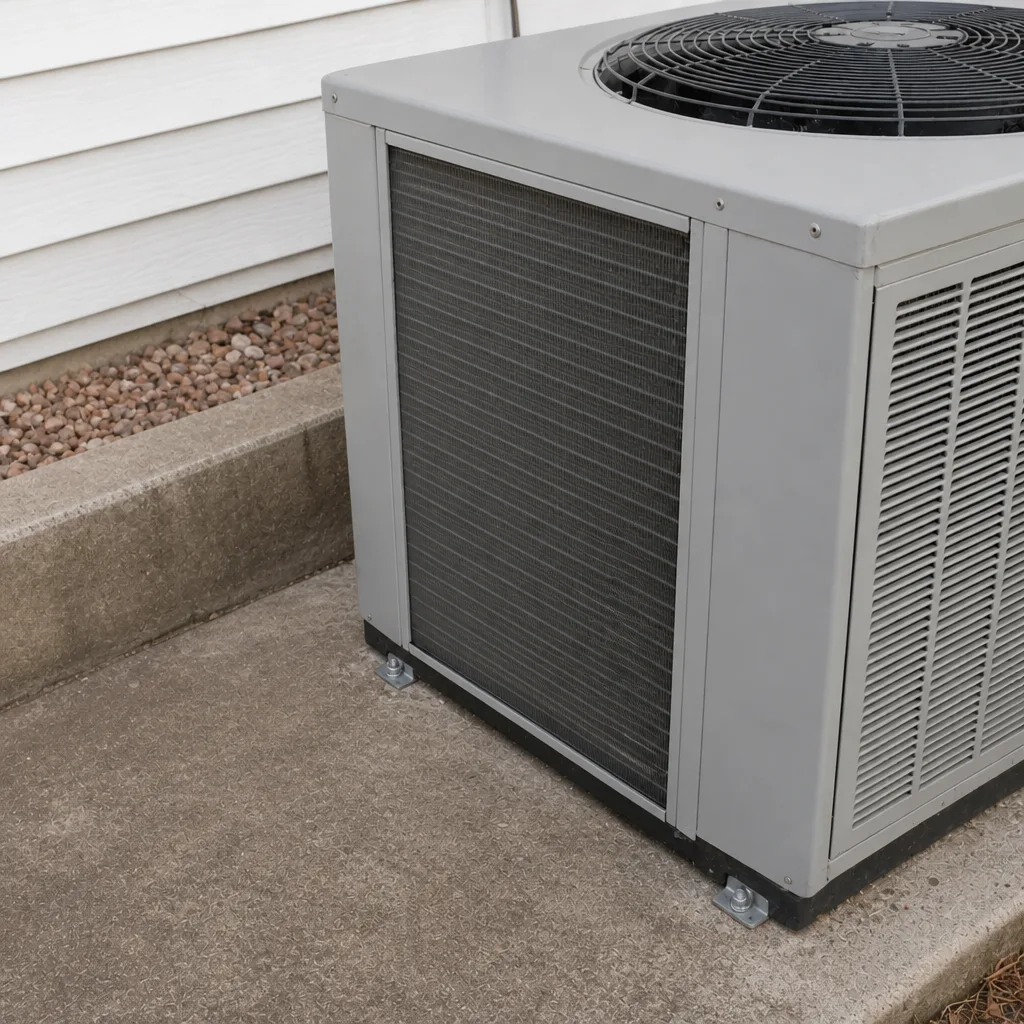 After
When to Call a Professional
Call a professional when the symptom is on the shut-down list, when the filter and return check come back clean but the airflow is still weak, when the system has iced up, or when the amp and volt readings you’ve taken don’t match the nameplate. Call us as well if the noise you’re hearing is grinding, loud buzzing, or clicking at the outdoor unit – those are not troubleshooting sounds, they’re failing-component sounds.
Winchester AC Repair offers free estimates in Winchester – call (888) 335-7951. We answer 24/7. Fast dispatch from 7am to 7pm, Sunday through Friday. Our technicians have up to 13 years of experience with the nine brands we service most in this area, and we’ll tell you straight whether your symptom is a ten-minute fix or a technician call. If the system turns out to be at the end of its life, we’ll walk you through AC installation without pushing you toward a brand we happened to have on hand.
Frequently Asked Questions
Warm air from the vents with normal airflow usually means the compressor isn’t running or the system is low on refrigerant. Check the outdoor fan first: if it’s spinning but the top of the unit is not blowing warm air, the compressor is likely off – shut the system down and call. If you see frost on the indoor coil or lines, that confirms it. Call (888) 335-7951 for a free estimate.
Yes, to a point. You can safely check the thermostat setting and batteries, the air filter, every return grille, and whether the outdoor fan is spinning. You can also look for ice on the indoor coil and check the breaker once. Anything beyond that – refrigerant, capacitors, contactors, control boards – needs a technician with the right meter and the training to read it. If your checks don’t resolve the issue, call (888) 335-7951.
If the system is low on refrigerant, that’s a repair, not a routine top-off. Refrigerant is a sealed system – if the charge is low, refrigerant escaped somewhere. A proper visit finds the leak, repairs it, and then recharges. Simply topping off and hoping for the best is money spent twice. Our repair team handles this on every brand we service. Call (888) 335-7951 for the diagnostic.
Short cycling in Winchester heat usually means one of four things: the system is oversized for the house, the refrigerant charge is off, the indoor coil is frozen, or the thermostat is reading a false temperature. Each has a different fix, and none of them are safe to defer in peak summer. Call (888) 335-7951 and describe when the cycling started – that detail often shortens the diagnostic.
The single most common single-part failure we see is a run capacitor. It’s also one of the cheapest to fix, and it usually shows up as a system that won’t start or a compressor that hums and then shuts off. Second most common is a frozen evaporator coil from a dust-loaded filter – a Winchester-specific pattern driven by local dust and caliche particulate. Both are worth calling about early. Call (888) 335-7951 for a free estimate.
In Winchester, 30-45 days during windy stretches and every 60 days otherwise is a reasonable interval. The standard three-month advice assumes low-dust air; Winchester’s dust load makes that conservative. If you can’t see light through the filter when you hold it up, replace it – don’t wait for the calendar. For a system that’s already frozen up, call (888) 335-7951 before restarting it.
The Bottom Line
The difference between a DIY-resolved AC issue and a technician call is rarely “how long since I changed the filter.” It’s which symptom you’re actually looking at. Warm air from the vents with a spinning outdoor fan is a shut-it-down-now symptom. Warm air with ice on the coil is the same. Weak airflow with a clean filter is usually a technician call. Short cycling and grinding noises are failing components, not troubleshooting puzzles. Winchester’s dust and caliche load filters and outdoor coils faster than the standard guidance assumes, so if you haven’t touched either in 60 days, that’s the first thing to check before you do anything else. When in doubt, shut the system off and call. A free estimate today beats a compressor replacement next week. The Winchester team knows the local failure patterns and the nine brands we service most, and we’ll tell you straight whether the symptom is a ten-minute fix or a technician call.
Contact
If this guide hasn’t nailed your symptom, or you’ve already triaged it to a technician call, reach out. Our AC specialists handle repair, install, and maintenance – one team, focused on cooling. Call (888) 335-7951 for a free estimate. We answer 24/7. Fast dispatch from 7am to 7pm, Sunday through Friday. The estimated written price is set per job, and the price you see is the price you pay. For a full view of what we do across repair, install, and maintenance, start with Winchester AC Repair. The local pro is licensed and insured as their state requires. And if you’re comparing service providers, our AC repair page and AC installation page both lay out what a visit involves before you commit to anything.
Written by the team at Winchester AC Repair.