
Last updated November 18, 2026
 Furnace & heating
 Heat pumps
 Ductless mini splits
 Carrier
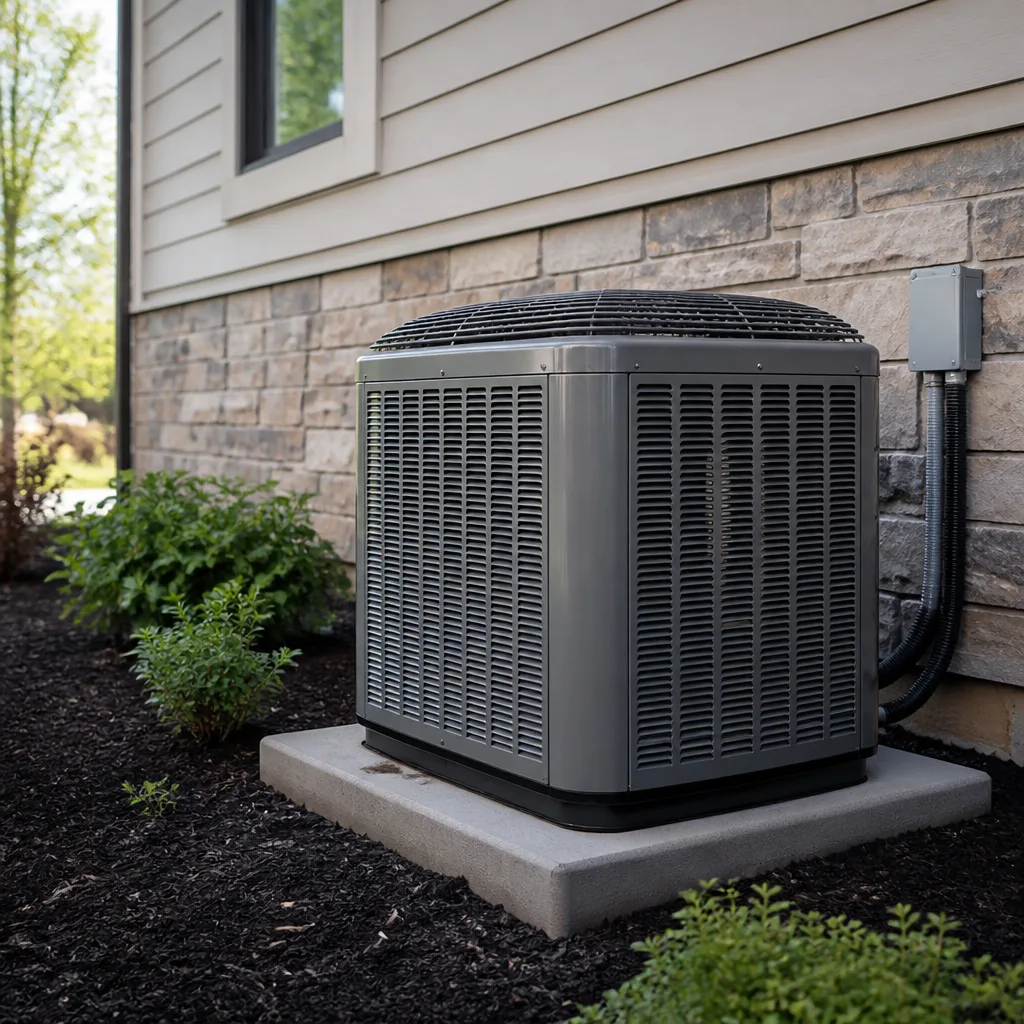 Trane
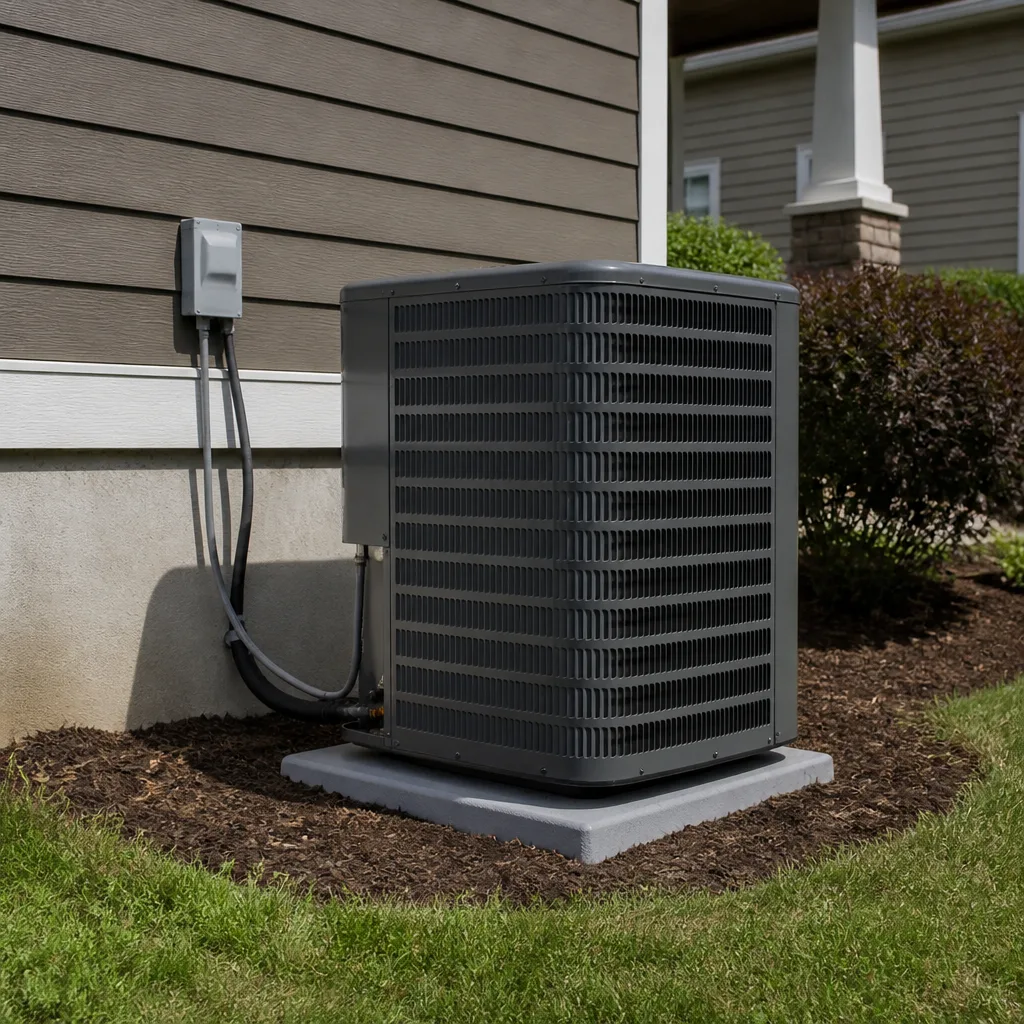 Goodman
Seasonal tune-up and full diagnostic on your Carrier, Trane, or Goodman system - readings shown to you before any repair is proposed
Diagnosis first, numbers second - you approve the repair price before a single part goes in.
Get your free estimateThe Complete AC Repair Guide for Winchester Homeowners
Most AC repair advice you’ll find online was written for a house in a mild climate. Winchester doesn’t work that way. Summer here holds triple digits for weeks, the monsoon pushes humidity and dust through the valley, and a central air system runs hard from spring into fall. That changes what fails first, how often it fails, and which repairs are worth your money. This guide covers what we’ve learned from servicing cooling equipment in Winchester: the failures that show up most, how to decide between repair and replacement, what to check before you call anyone, and how to read a quote without getting sold a system you don’t need.
Quick Answer
In Winchester, the most common central AC repairs are failed run capacitors, dirty or damaged condenser coils, and low refrigerant charge – and all three appear faster here than manufacturer schedules expect because the system runs so many hours a year in extreme desert heat. A repair on a system under 10 years old usually makes sense; on a system past 10 years with repeated failures, replacement often costs less over the next five years. Call (888) 335-7951 for a free estimate.
Styles & brands we work with
- AC installation
- Furnace & heating
- Heat pumps
- Ductless mini splits
- Carrier
- Trane
- Goodman
Table of Contents
- How Winchester Desert Heat Accelerates AC Failures
- The Three Failure Points We See Most in Winchester
- Repair or Replace? A Decision Framework for High-Runtime Systems
- What to Check Before You Call a Technician
- Brand Notes: Common Units in Winchester-Area Homes
- How to Read an AC Repair Quote
- Maintenance That Actually Extends Equipment Life
- When to Call a Professional
- Frequently Asked Questions
How Winchester Desert Heat Accelerates AC Failures
Manufacturer testing assumes a typical duty cycle. In a desert, that assumption gets stretched. A central air conditioner in Winchester runs a long season with very little rest, and the components that carry current or reject heat are the ones that pay for it. The practical result: parts wear out earlier than the manual’s timeline suggests, and small problems turn into no-cooling calls during the worst possible week.
Three forces do most of the damage:
- Thermal cycling. Every time the compressor starts and stops, the run capacitor takes a jolt. In a high-runtime climate, the number of starts per season adds up quickly.
- Dust and dry air. The valley carries fine dust that settles on condenser coils and reduces how well the unit sheds heat. A coil that can’t reject heat forces the compressor to work harder.
- Refrigerant pressure swings. High outdoor temperatures push head pressure up. A system that’s slightly low on charge runs hotter and stresses the compressor more than the same system would in a cooler climate.
What this means for you: the same unit that might run a decade in a moderate climate may need attention sooner in Winchester. That’s not a sales angle – it’s a maintenance reality, and it’s why we recommend a cooling check before peak season rather than after a breakdown. Our AC maintenance visits focus on the parts heat punishes first.
The Three Failure Points We See Most in Winchester
Across the units we service, most no-cooling calls trace back to one of three things. Knowing them helps you describe your symptoms clearly and understand what a technician is checking.
1. Failed run capacitors
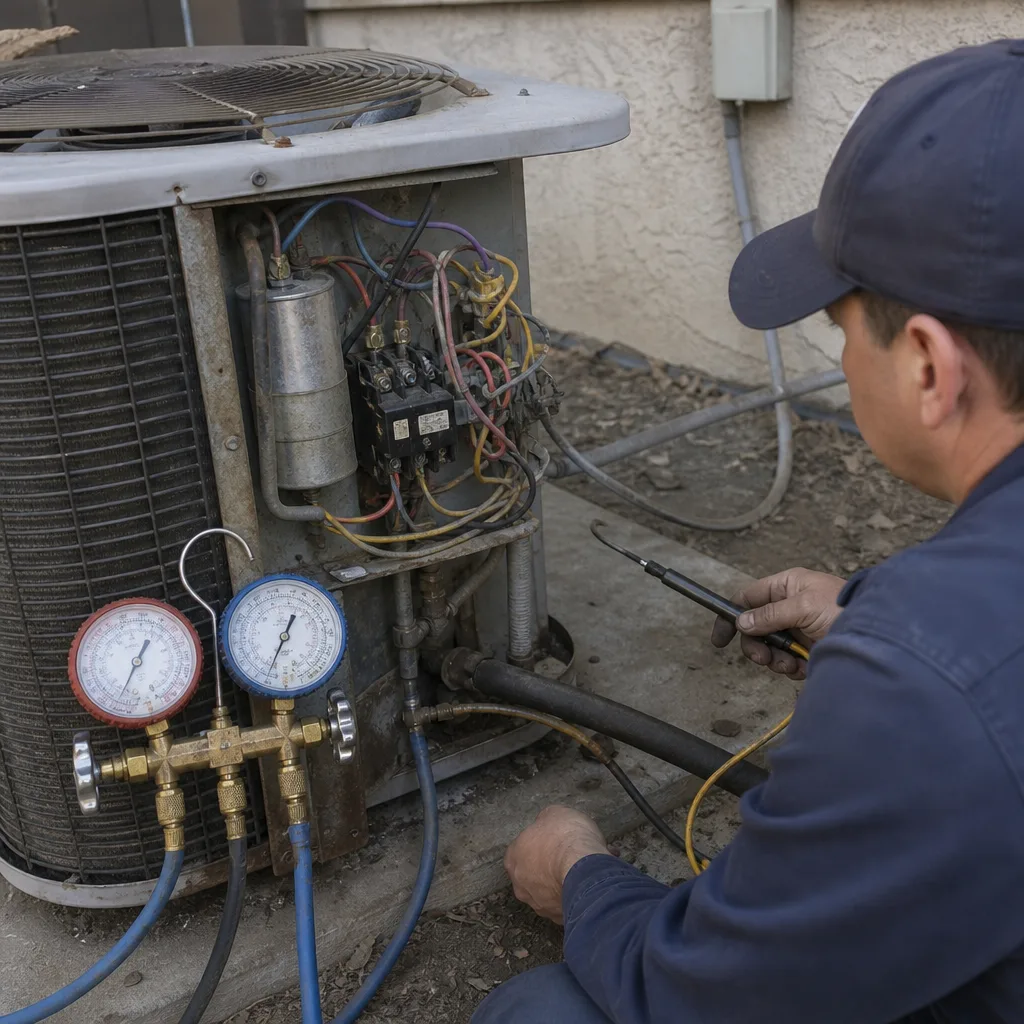
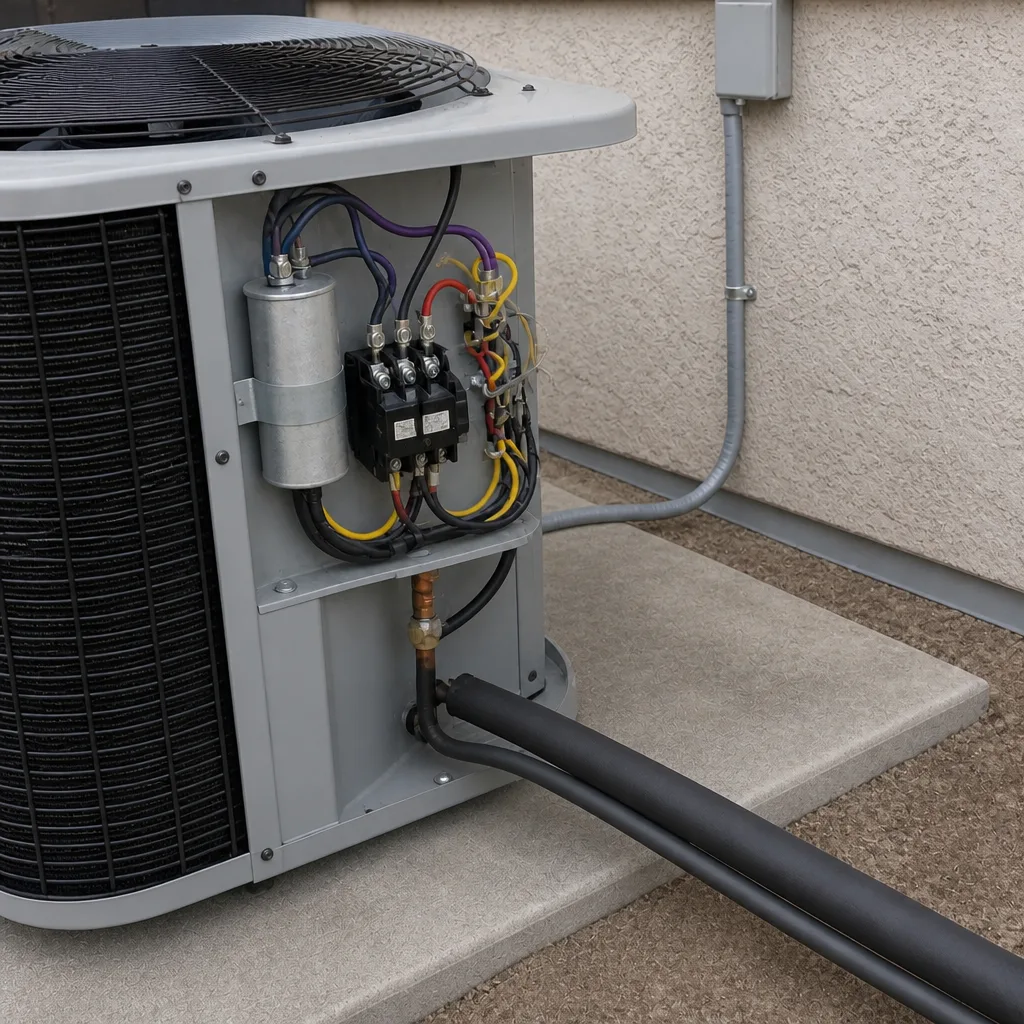
The run capacitor gives the compressor and fan motor the jolt they need to start. In desert heat it sits in one of the hottest parts of the system and degrades faster than in cooler climates. Symptoms include a unit that hums but won’t start, a compressor that trips the breaker, or a fan that spins slowly or not at all. This is one of the most common and most affordable repairs – a capacitor replacement is a straightforward fix when it’s caught early.
2. Dirty or damaged condenser coils
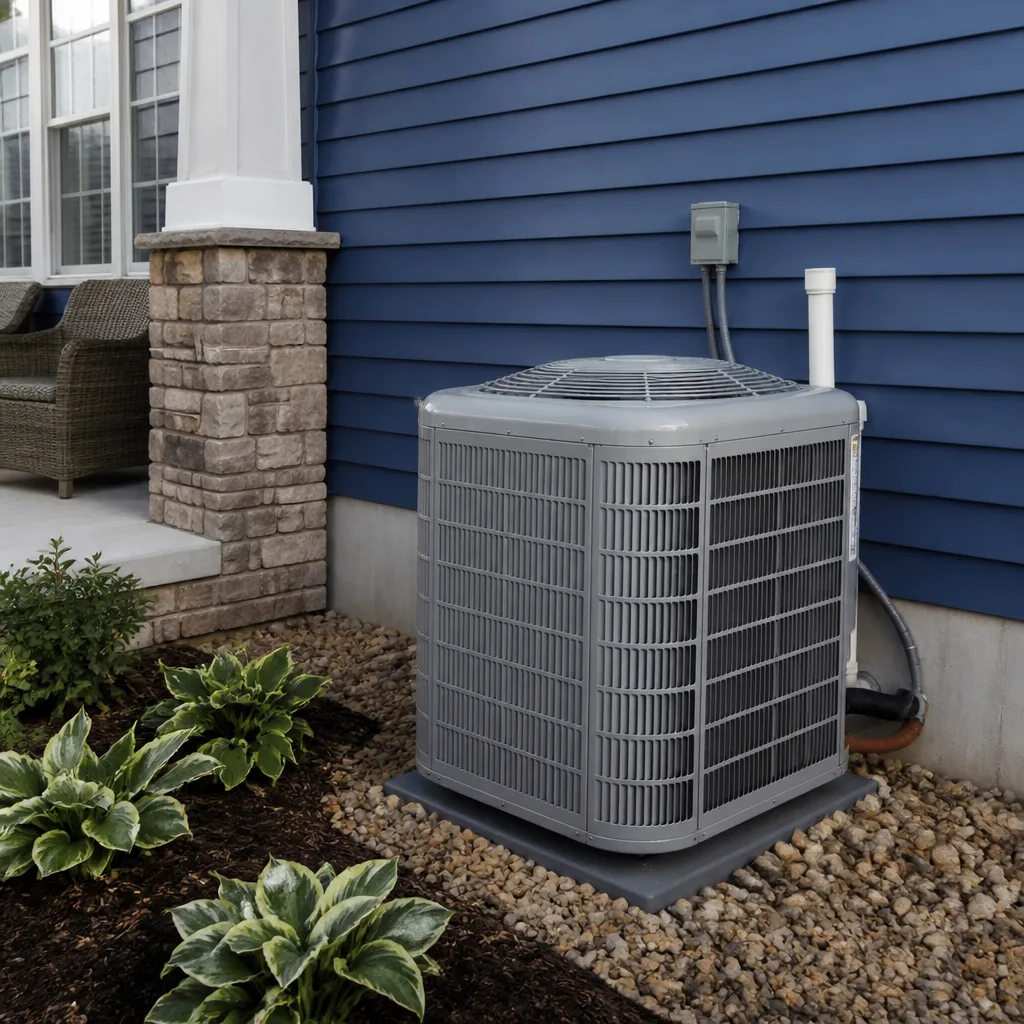
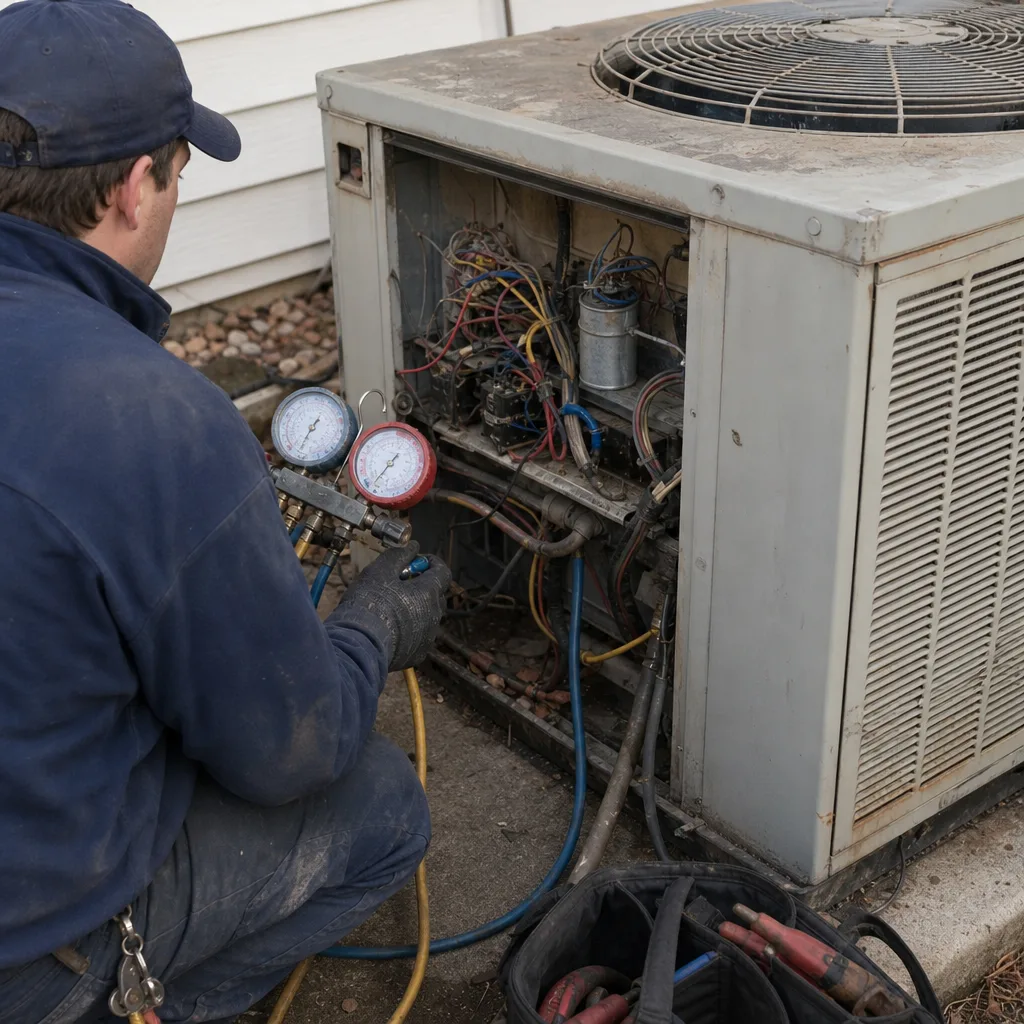
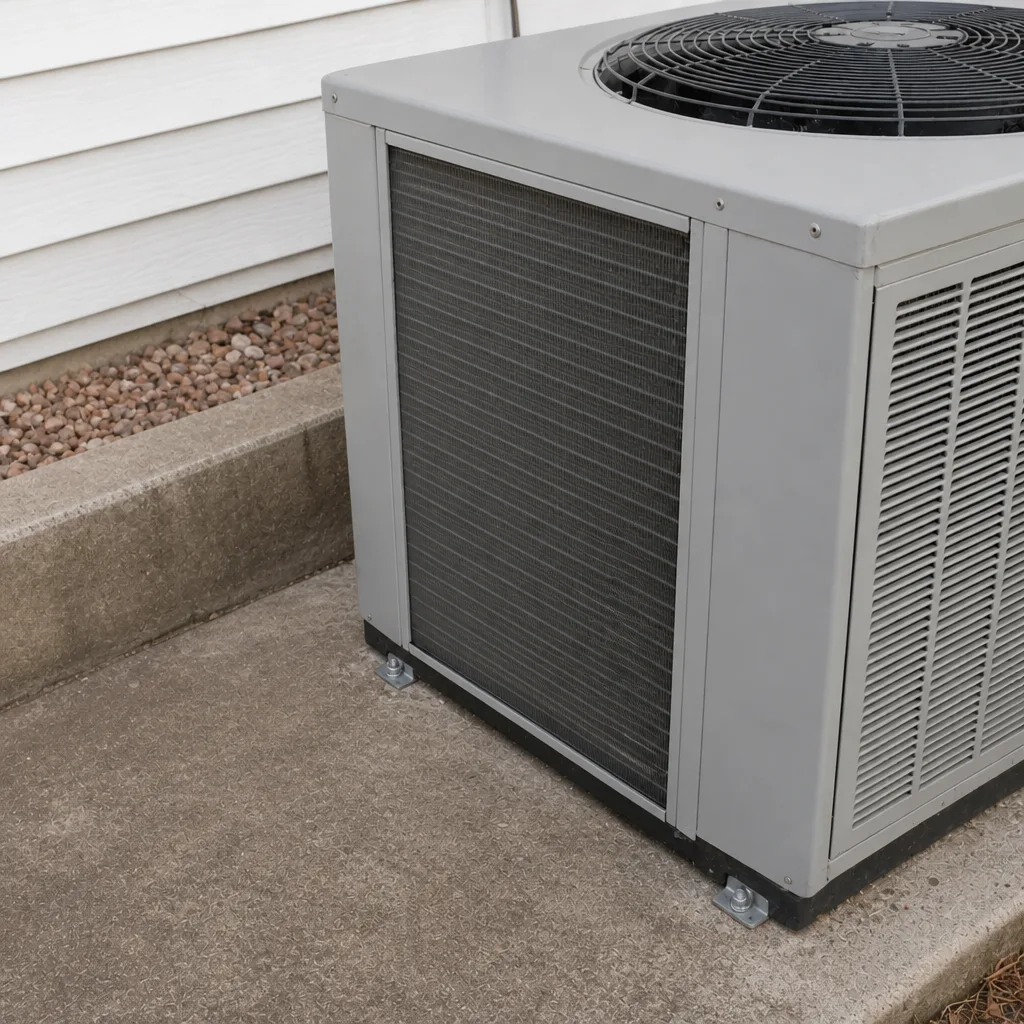
The outdoor coil is your system’s radiator. When dust and debris coat it, the unit can’t shed heat, and cooling capacity drops while energy use climbs. In Winchester, coil cleaning is genuinely preventive work, not an upsell. Bent fins from debris and hail-driven impacts also reduce airflow. We check coil condition on every repair visit because a dirty coil can mimic a refrigerant problem.
3. Low refrigerant charge
Low charge means one of two things: a slow leak, or a system that was never charged correctly. A technician should find the leak before adding refrigerant – topping off a leaking system just postpones the same call. If your system is low, the right question is “where is it leaking?” not “how much refrigerant do I need?”
Repair or Replace? A Decision Framework for High-Runtime Systems
This is the question homeowners ask us most, and the honest answer depends on age, repair history, and what the repair actually costs relative to a new system. In a high-runtime climate, “10 years” is a more meaningful line than the 15-year figure quoted in generic guides.
Use this framework as a starting point – a technician’s inspection should confirm or change the picture:
- Under 10 years old, first major repair: Repair. A capacitor, contactor, or blower motor on a younger system is almost always worth fixing.
- Under 10 years old, second or third repair in two seasons: Get a full inspection. Repeat failures can point to a root cause – like a coil leak – that a single fix won’t solve.
- Over 10 years old, single affordable repair: Often still worth it. If the repair is small and the compressor is healthy, repair buys you time.
- Over 10 years old, compressor or coil failure: Weigh the repair cost against a new system. In desert conditions, these are the failures that typically tip the balance toward replacement.
- Any age, refrigerant leak in the evaporator coil: Ask whether the coil is under warranty before deciding. Warranty coverage can change the math significantly.
When replacement is the better call, we’re upfront about it – and we handle it through AC installation so you’re not vetting a second contractor. What we won’t do is push replacement because that’s the only job a technician knows how to sell.
What to Check Before You Call a Technician
Some “AC problems” resolve in five minutes, and some checks sharpen your diagnosis so a technician arrives already pointed at the likely cause. Run through these first – none of them involve opening the equipment, and all are safe for a homeowner.
- Check the thermostat. Confirm it’s set to COOL, the temperature is below the current room temperature, and the batteries (if it takes them) are fresh. A thermostat in the wrong mode is a surprisingly common “no-cooling” call.
- Check the breaker. Look for a tripped breaker at the panel. If it trips again after you reset it once, stop and call – repeated trips point to an electrical problem that needs a professional.
- Check the filter. A clogged filter chokes airflow and can freeze the indoor coil. Replace it if it’s gray or loaded with dust. In Winchester, filters load faster than the 90-day rule suggests.
- Check the outdoor unit. Confirm it’s running and that nothing is blocking airflow – debris, storage, or overgrown vegetation around the unit. Look at the coil; if it’s visibly coated, that’s worth mentioning.
- Note the symptoms. Is the outdoor unit running but blowing warm air? Is the indoor blower running with no cooling? Does it short-cycle? Write down what you see – a clear symptom description saves diagnostic time.
What you should not do: open the electrical panel of the unit, handle refrigerant lines, or attempt to recharge the system yourself. Refrigerant handling is regulated and requires proper equipment, and the electrical components inside the unit can shock you even after the breaker is off. Diagnosing a capacitor or a refrigerant leak is trained work.
Brand Notes: Common Units in Winchester-Area Homes
Newer isn’t the only variable in a repair. The brand and model family matter because each has its own failure patterns and its own parts quirks. We’re factory-familiar with the brands most Winchester homes actually have – Carrier, Trane, Lennox, Goodman, Rheem, York, Daikin, Bryant, and American Standard – so we’re not guessing when we open a unit we’ve seen before.
A few general notes on patterns we see:
- Goodman units are common in value-focused installs, and we see a fair share of capacitor and contactor failures on older units in the desert. Parts availability is usually good, which keeps repairs straightforward.
- Rheem systems in this climate tend to show coil and charge issues over time; a careful leak check matters more than a quick recharge.
- York units appear in a mix of residential installs, and we’ve worked through the diagnostic quirks on their control boards enough times to recognize them.
- Daikin has gained ground in recent years, and its inverter-driven equipment needs a technician comfortable with the electronics, not just the mechanical side.
If your unit is a brand outside these names, tell us when you call and we’ll confirm whether we can service it. Our focus is cooling, and our brand list is broad – but we’d rather be accurate than overpromise. You can start with AC repair if you already know you’re dealing with a breakdown.
How to Read an AC Repair Quote
An AC repair quote should be a line-by-line document you can actually read, not a lump sum with a shrug. Here’s how to tell a thorough quote from a thin one.
Line items that should be standard:
- Diagnosis: the specific problem found, described in plain language
- Parts: what part, which brand, and whether it’s under warranty
- Labor: clearly stated
- Any additional work recommended, itemized separately so you can approve or decline it
What looks like padding: bundling several “while we’re here” services into the price without explaining each one; recommending a full system replacement on a single failed capacitor with no other findings; or quoting a component the diagnosis doesn’t support.
What a missing line item might signal: A quote for “recharge” with no leak test is a signal the technician skipped a step. A quote that doesn’t mention inspecting the coil, checking the capacitor, and testing the compressor is a shallow quote, not a thorough one. And a quote with no parts warranty information is worth a follow-up question.
Ask any contractor: “What did you test, and what did the tests show?” A specialist can answer that specifically. A free estimate from us includes exactly that – call (888) 335-7951 to schedule.
Maintenance That Actually Extends Equipment Life
Maintenance isn’t a club you join for a sticker. Done right, it’s the difference between catching a failing capacitor in May and dealing with a no-cooling call in July. In Winchester’s climate, a seasonal cooling check is worth more than it is in a mild one, because the system runs so much harder.
What a real maintenance visit should include:
- Filter check and replacement guidance
- Condenser coil cleaning and fin inspection
- Capacitor and contactor testing
- Refrigerant charge verification and pressure readings
- Blower motor and belt inspection (if belt-driven)
- Thermostat calibration and controls check
- Drain line clearing to prevent water damage
- A written report of what was found
Timing matters in the desert. We recommend booking a cooling check before peak season so any weak parts are replaced while the system is still keeping you comfortable. Our AC maintenance visits are built around the parts that heat punishes first – not a generic checklist. If your system is in Winchester and hasn’t been checked this year, that’s a good place to start.
When to Call a Professional
Some symptoms mean “wait and see”; others mean “call now.” Call a professional right away if you’re getting warm air with the unit running, if the breaker trips repeatedly, if you smell a burning odor near the equipment, if the indoor unit is icing over, or if the system won’t start at all. Those point to electrical faults, refrigerant problems, or component failures that get worse when ignored. Call sooner, not later, if anyone in the home is elderly or if the heat is extreme, because a failed system in a desert summer is a health risk, not just an inconvenience.
Winchester AC Repair offers free estimates in Winchester – call (888) 335-7951. We answer 24/7, and fast dispatch from 7am to 7pm gets a trained technician to your door.
Frequently Asked Questions
AC repair costs in Winchester vary by the part and the diagnosis – a capacitor replacement is at the low end, while compressor or coil work is at the high end. The written estimate sets the final price, and estimates are free. Call (888) 335-7951 for an exact quote.
Because the system runs so many hours a year in extreme heat, parts that carry current or reject heat wear faster than the manufacturer’s timeline assumes. Capacitors, coils, and refrigerant charge are the first to show strain. A pre-season check catches those failures while they’re still cheap to fix.
No. Topping off a leaking system only postpones the same breakdown, and refrigerant handling requires proper equipment and training. A technician should find and address the leak before recharging. Call (888) 335-7951 to schedule a leak check.
It depends on the failure. A single affordable repair on a 10-plus-year-old system is often still worth doing. A compressor or coil failure on a system that age usually makes replacement the better value. An inspection confirms which case you’re in – and that inspection is free.
We’re factory-familiar with Carrier, Trane, Lennox, Goodman, Rheem, York, Daikin, Bryant, and American Standard – the brands most Winchester homes actually have. If your unit is outside that list, call and we’ll confirm whether we can service it. Our technicians have up to 13 years of experience working on cooling equipment.
Check the thermostat mode and setpoint, the breaker, and the filter – those resolve a surprising share of “no-cooling” calls. If those check out and the system still won’t cool, call (888) 335-7951. We answer 24/7.
The Bottom Line
Winchester is a hard place to run an air conditioner. The heat, the dust, and the long season mean parts fail earlier than generic schedules suggest, and the difference between a small repair and a mid-summer replacement is usually whether someone checked the system before peak season. Learn the three failure points – capacitors, coils, and charge – know the 10-year decision line, run the safe homeowner checks before you call, and read a quote line by line. That’s the whole guide in a paragraph. Our team has up to 13 years of experience on the brands most Winchester homes have, and we focus only on cooling. When you’re ready, call (888) 335-7951 for a free estimate.
Written by the team at Winchester AC Repair.
See the difference
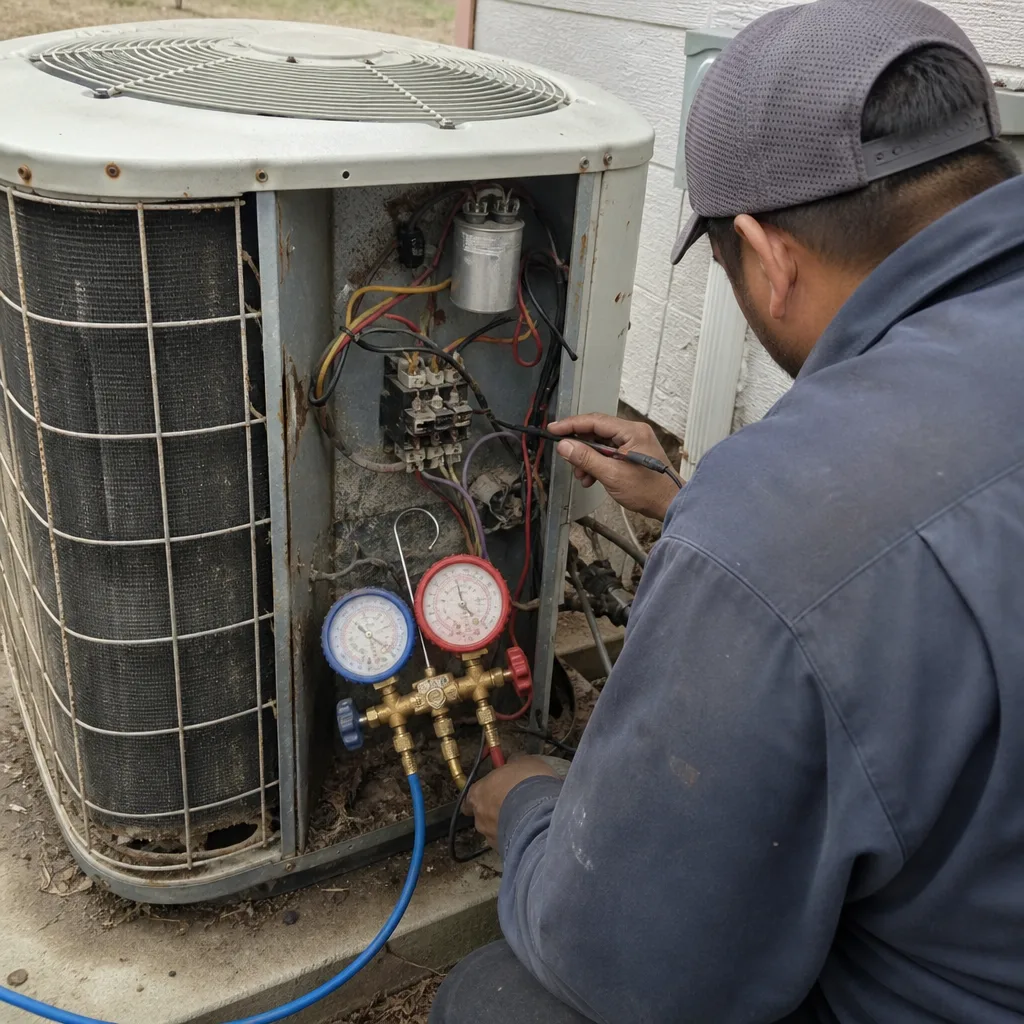 Before
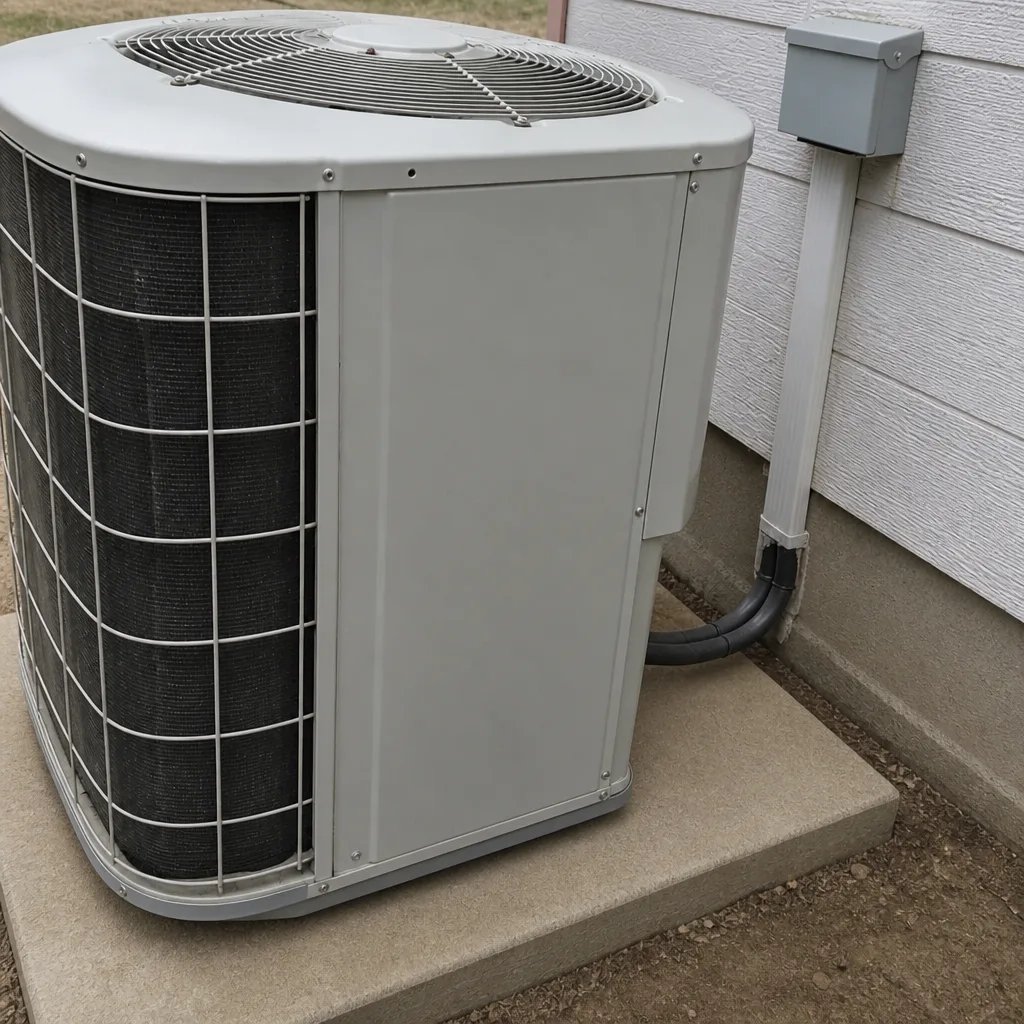 After
 Before
 After
 Before
 After